The store will not work correctly when cookies are disabled.
Notice: In observance of the holiday season, our warehouse will be closed December 25 and January 1. Customer Services will be unavailable December 24–25 and January 1. Notice: In observance of the holiday season, our warehouse will be closed December 25 and January 1. Customer Services will be unavailable December 24–25 and January 1.
Alert
Notice: In observance of the holiday season, our warehouse will be closed December 25 and January 1. Customer Services will be unavailable December 24–25 and January 1.
Pediatric Advanced Life Support (PALS) uses a series of videos and simulated pediatric emergencies to reinforce the important concepts of a systematic approach to pediatric assessment, basic life support, PALS treatment algorithms, effective resuscitation, and team dynamics.
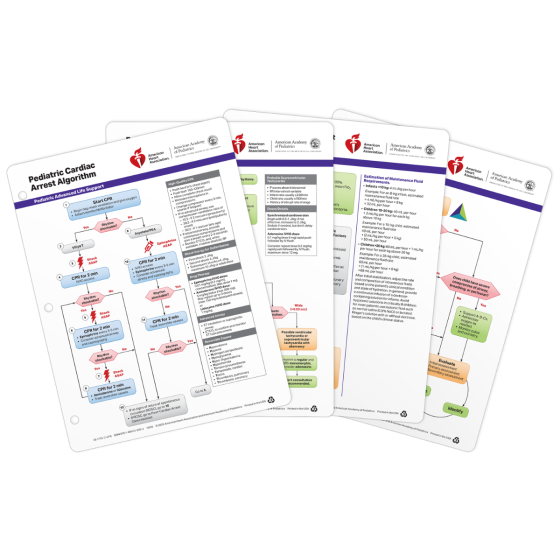
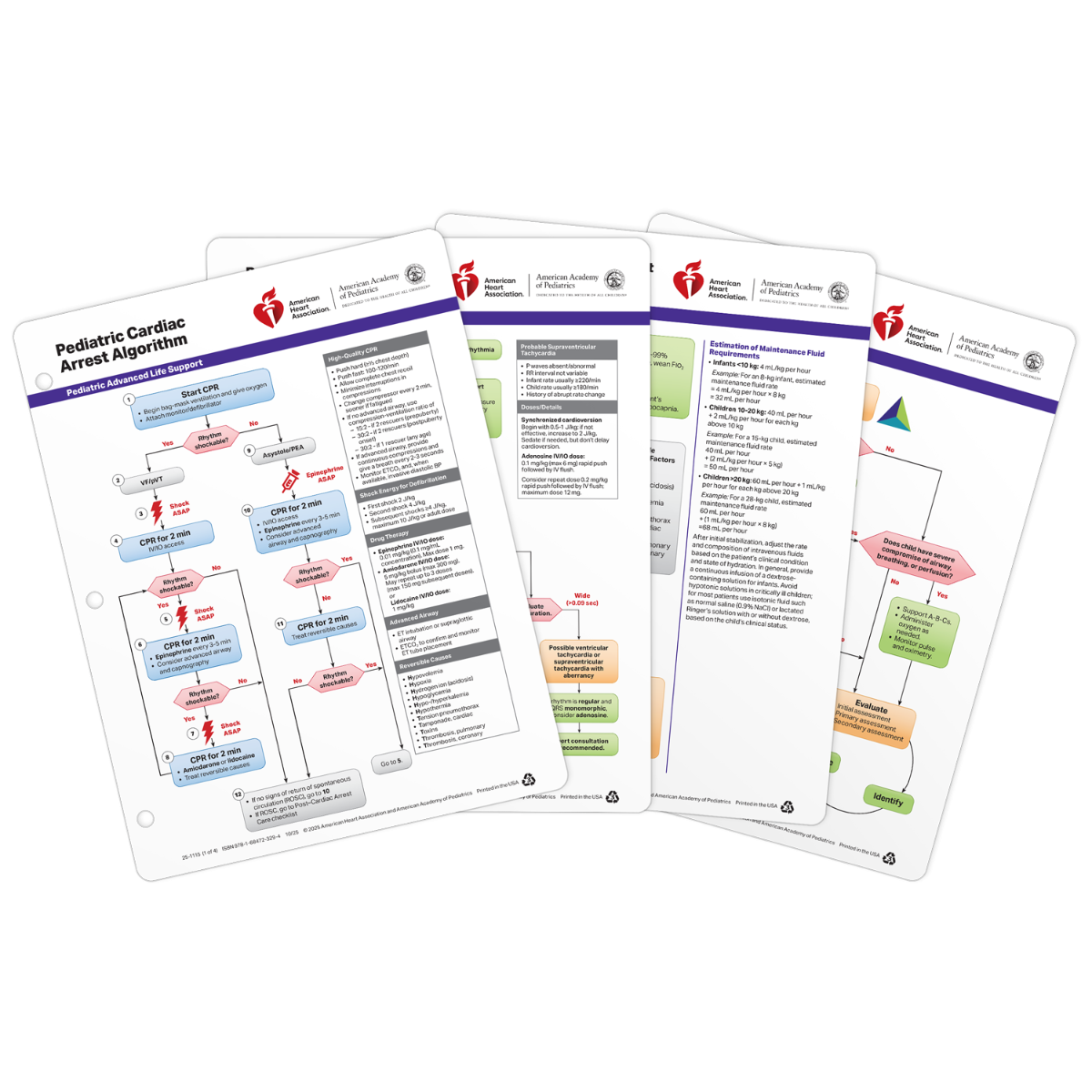
These cards provide convenient, quick reference to treatment algorithms and are intended to be placed on each emergency crash cart in a variety of healthcare settings.
This product has been updated to reflect new science from the 2025 Guidelines for CPR and ECC and replaces the previous version (20-1115).
The PALS Emergency Crash Cart Cards are designed for use by healthcare professionals in a variety of healthcare settings.
The PALS Course is for healthcare providers who either direct or participate in the management of respiratory and/or cardiovascular emergencies and cardiopulmonary arrest in pediatric patients. This includes personnel in emergency response, emergency medicine, intensive care and critical care units such as physicians, nurses, paramedics and others who need a PALS Course Completion Card for job or other requirements.
Reference Card
Reference Cards are portable and convenient quick-reference guides that provide easy access to life-saving information.
Pediatric Advanced Life Support (PALS)
Pediatric Advanced Life Support (PALS) uses a series of videos and simulated pediatric emergencies to reinforce the important concepts of a systematic approach to pediatric assessment, basic life support, PALS treatment algorithms, effective resuscitation, and team dynamics.


 Reference Card
  Print
Print  PALS
PALS