

 Reference Card
  Print
Print  BLS
BLS Description
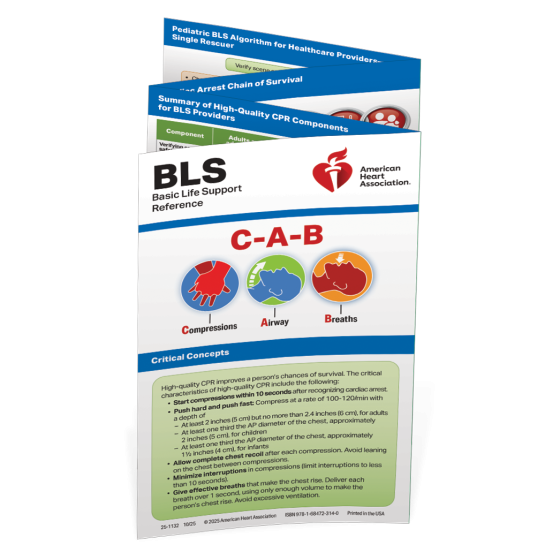
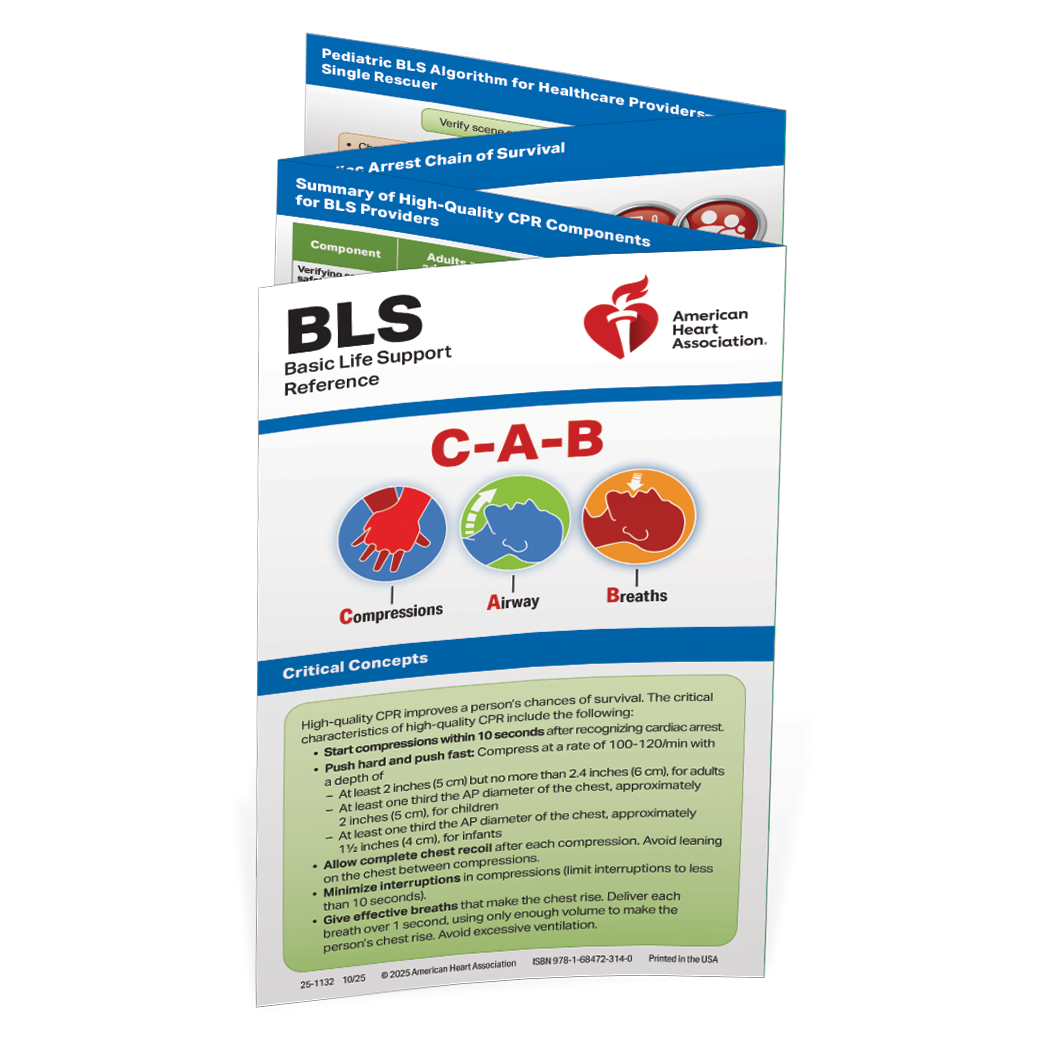
The AHA’s BLS Reference Card is a convenient, quick reference tool that healthcare professionals can access during the BLS Course and in a variety of healthcare settings. This 4" x 6.5" 4-paneled card includes:
• CAB/Critical Concepts
• Cardiac Arrest Chain of Survival
• Adult BLS Algorithm for Health Care Professionals
• Cardiac Arrest in Pregnancy Algorithm for Health Care Professionals
• Pediatric BLS Algorithm (Infants to Puberty) for Health Care Professionals-Single Rescuer
• Pediatric BLS Algorithm (Infants to Puberty) for Health Care Professionals-2 or More Rescuers
• Summary of High-Quality CPR Components for BLS Professionals
• Relief of Foreign-Body Airway Obstruction
Product Specifications
- Associated Course : BLS
- Format : Print
- Product Type : Reference Card
- Weight ( In lbs ) : 0.050000
Audience
The BLS Reference Card is designed for healthcare providers and trained first responders who provide care to patients in a wide variety of settings, as well as individuals in a healthcare training program.


